
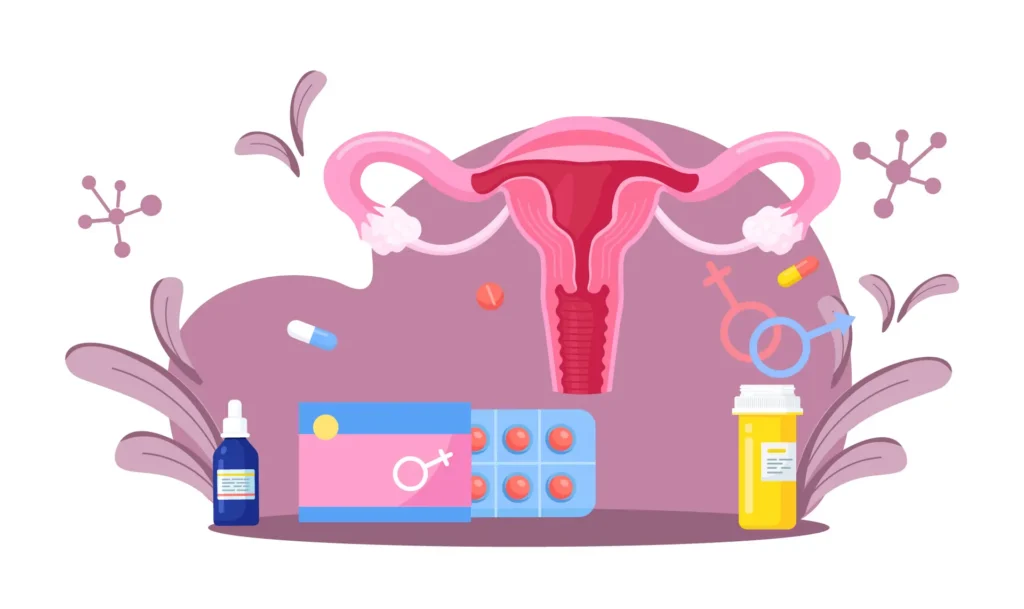
Gynecology is the medical speciality concerned with women’s health at every stage of their lives.
It examines and cares for the female reproductive system, monitoring the menstrual cycle, hormonal balance, sexual health and pregnancy, as well as any conditions that may affect the ovaries, uterus, cervix or breasts.
The aim of gynecology is to provide comprehensive prevention, early diagnosis and appropriate treatment, so that every woman feels healthy, safe and well-informed about her body.
Methods used:
Clinical Gynecological Examination
Techniques/Methods
- Examination of the external and internal genitalia.
- Palpation of the uterus and ovaries.
- Checking vaginal health using a colposcope.
- Taking samples from the vagina and cervix (e.g. Pap smear).
Benefits
- Immediate and painless diagnosis of problems.
- Prevention of serious conditions (e.g. cervical cancer, infections).
- Advice on hygiene, reproduction and contraception.
Who is it for
- All women, regardless of age.
- Particularly women with symptoms (pain, bleeding, discharge).
- Women who need a preventive check-up.
Objectives
- Early diagnosis and prevention.
- Referral for further tests or treatment.
- Educating women on self-monitoring.
Pap Test and HPV Test
Techniques/Methods
- Collection of a cell sample from the cervix and the vagina.
- Cytological analysis for precancerous lesions.
- In combination with an HPV test for high-risk types.
Advantages
- Prevention of cervical cancer.
- Early detection of precancerous lesions.
- Painless and quick procedure.
Who is it for
- Women aged 21–65 (depending on medical history and guidelines).
- Women with a history of HPV or cervical lesions.
Objectives
- Prevention of cervical cancer.
- Guidance on treatment or further investigation.

Transvaginal ultrasound
Techniques/Methods
- Transvaginal and transabdominal ultrasound.
- Assessment of the uterus, ovaries and fallopian tubes.
- Monitoring of menstrual cycle and pregnancy.
- Screening for cysts, fibroids or other conditions.
Advantages
- Safe, non-invasive examination.
- Immediate imaging and diagnosis.
- Helps in making decisions regarding treatment or surgery.
Who is it for?
- Asymptomatic women (annual screening).
- Women with symptoms (pain, irregular bleeding).
- Women undergoing scheduled cycle or pregnancy monitoring.
- Women with a history of gynaecological conditions.
Objectives
- Diagnosis and monitoring of gynaecological problems.
- Assessment of reproductive health.
- Guidance on further treatment.
Therapeutic Interventions (Pharmacological or Minimally Invasive Techniques or Surgical Procedures)
Techniques/Methods
- Pharmacological management of hormonal disorders (e.g. contraceptives, hormone therapy).
- Treatment of infections and inflammation (e.g. vaginitis, cervicitis).
- Minimally invasive procedures (e.g. hysteroscopy, endometrial biopsy).
- Surgical management of gynaecological conditions (e.g. fibroids, ovarian cysts, gynaecological malignancies, breast cancer).
- Management of urinary incontinence.
- Family planning & contraception (e.g. pill, ring, coil).
Advantages
- Painless or minimally invasive treatment.
- Rapid recovery.
- Avoiding major surgery where possible.
Who is it for
- Women with hormonal disorders or symptoms (e.g. menstrual disorders).
- Women with intrauterine or cervical conditions (e.g. uterine fibroids, cervical HPV infection).
- Women with gynaecological conditions (e.g. fibroids, ovarian cysts, gynaecological malignancies, urinary incontinence).
Objectives
- Restoration of normal reproductive system function.
- Prevention of complications.
- Maintenance of women’s health and fertility.
Assisted Reproduction – In Vitro Fertilisation
With experience and expertise in female reproduction, we offer modern techniques:
- In-vitro fertilisation (IVF)
- Intracytoplasmic sperm injection (ICSI)
- Egg and embryo freezing
- Egg donation programme
- Pre-implantation genetic diagnosis (PGD)
- Treatment of male factor infertility