

Obstetrics is a medical speciality concerned with women’s health during pregnancy, childbirth, the postnatal period and the first year after the child’s birth.
The obstetrician monitors the development of the fetus, looks after the mother’s health and provides support for a safe pregnancy and normal delivery. The aim of obstetrics is the safety and well-being of both the mother and the baby.
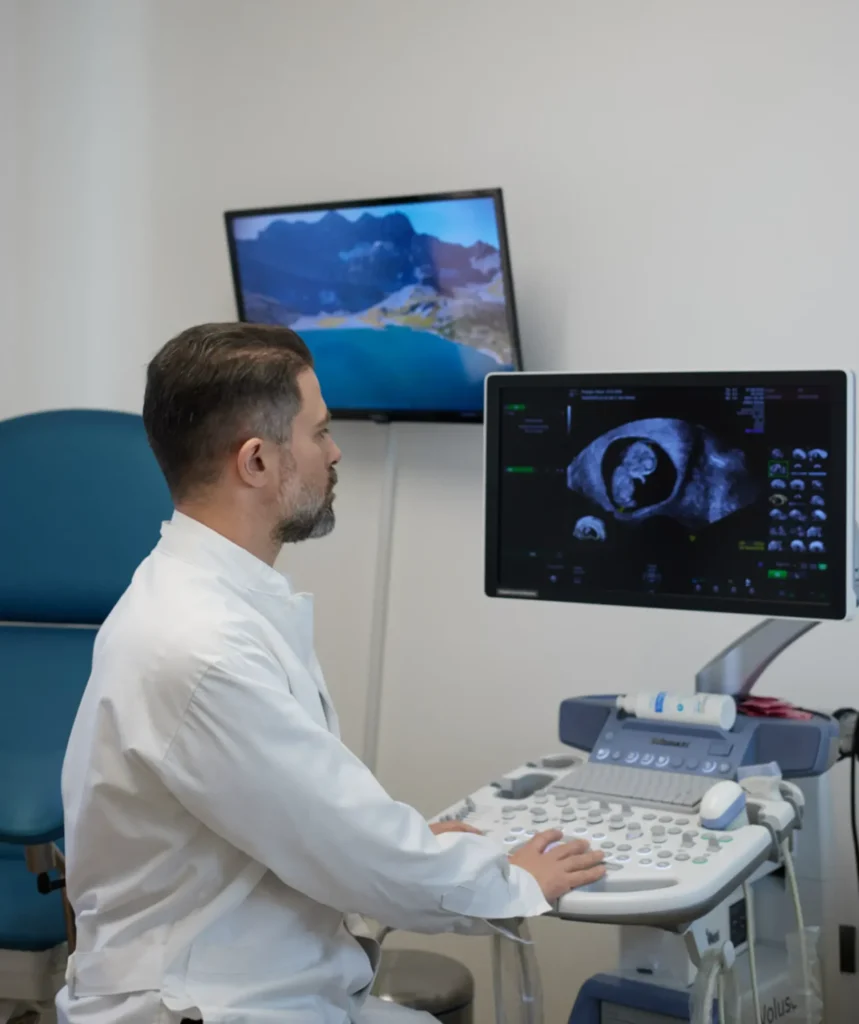
Approaches and methods used:
Prenatal Care (Prenatal Check-ups)
Techniques/Methods
- Regular clinical monitoring of the mother and fetus.
- Ultrasound examination (fetal biometry, Doppler, 3D/4D ultrasound).
- Laboratory blood and urine tests.
- Monitoring of blood pressure, body weight and nutritional status.
- Vaccinations and advice on a healthy lifestyle.
Benefits
- Early diagnosis of pregnancy complications.
- Prevention of complications for mother and fetus.
- Support for the healthy development of the fetus.
- Psychological reassurance and guidance throughout the pregnancy.
Who is it for
- All pregnant women from the start of pregnancy.
- Women with a history of complications or high-risk pregnancies.
Objectives
- To safeguard the health of the mother and fetus.
- Early diagnosis and management of medical conditions.
- Educating and guiding the mother towards a safe pregnancy.
Prenatal Ultrasound
Techniques/Methods
- Transvaginal and transabdominal ultrasound.
- Monthly check-ups (1st, 2nd, 3rd trimester).
- Doppler for placental and umbilical cord blood flow.
- 3D/4D ultrasound for three-dimensional imaging of the fetus.
Advantages
- Safe and painless for mother and fetus.
- Immediate assessment of fetal development and position.
- Ability to diagnose abnormalities at an early stage.
- Supports the psychological bond with the baby.
Who is it for
- All pregnant women.
- Women with a history of complications or high-risk pregnancies.
Objectives
- Monitoring the normal development of the fetus.
- Early detection of abnormalities or problems.
- Assessment to ensure proper preparation for childbirth.
Risk Assessment and Genetic Testing
Techniques/Methods
- Taking a family history.
- Genetic screening for hereditary conditions.
- Assessment of risk factors for pregnancy complications.
- Information on precautionary measures.
Benefits
- Prevention of serious conditions or complications.
- Clear guidance on pregnancy decisions.
- Assessment of the likelihood of hereditary diseases.
Who is it for
- Women with a family history of genetic disorders.
- High-risk women (e.g. previous pregnancy complications).
Objectives
- To reduce the risk to the mother and fetus.
- Preparation for a safe pregnancy.
- Early diagnosis of genetic disorders.

Childbirth Support and Obstetric Monitoring
Techniques/Methods
- Continuous clinical monitoring during labour.
- Pain management (epidural, analgesics, natural methods of relief).
- Fetal heart rate monitoring (cardiotocography).
- Support for vaginal delivery or caesarean section where indicated.
Advantages
- Safe and controlled delivery.
- Immediate management of complications.
- Support for the mother and family.
- Reduced anxiety and increased self-confidence.
Who is it for
- All pregnant women during childbirth.
- Women with high-risk pregnancies or a history of complications during childbirth.
Objectives
- Safe delivery for mother and baby.
- Support for a natural labour process.
- Optimising the mother’s psychological and physical experience.
Postnatal Care
Techniques/Methods
- Monitoring physical recovery.
- Monitoring of postnatal recovery and breastfeeding.
- Guidance on physical exercise and nutrition.
- Mental health support.
Benefits
- Safe postnatal recovery.
- Prevention of complications (haemorrhage, infection, depression).
- Smooth adjustment for mother and newborn.
Who is it for
- All women after childbirth.
- Particularly in cases of caesarean section or childbirth complications.
Objectives
- Restoration of the mother’s health.
- Support for breastfeeding and newborn care.
- Monitoring psychological well-being.